


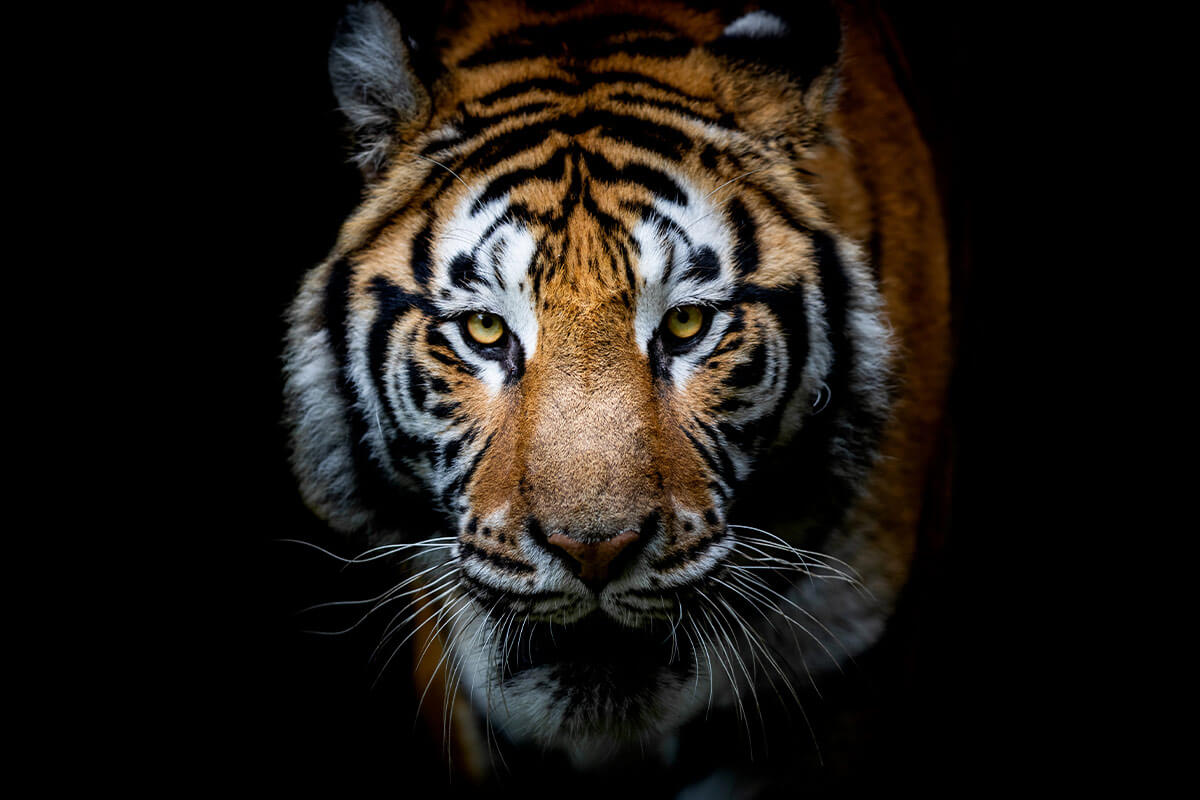
Fact: Tigers and wild animals are not appropriate house pets.
You would never know it though, if your only encounter with the plight of wild animals is through watching Tiger King-Murder Mayhem and Madness, the latest craze on Netflix. Millions of viewers are enthralled by the romanticized images of stunning tigers riding in convertibles, frolicking like affable overgrown house cats in living rooms and casino hotel rooms, and may even wonder how they can get one too.
The actual treatment of the animals and their living conditions are glossed over and overshadowed by the bizarre true story of Joe Exotic, the “Tiger King.” Stranger than fiction is an understatement! It would take some imagination to create a fictional character self-named “Joe Exotic”, a roadside zoo keeper and tiger breeder who: sports a two-toned mullet, multiple earrings, and tattoos; possesses an arsenal of guns and explosives; has a very distinct twangy speaking voice, (hidden though, as he lip-synchs to country music); starred in his own low-budget internet talk shows; married several husbands, sometimes at the same time; ran for the office of US president and for governor of Oklahoma; harbors an obsessive vendetta against Carol Baskin (a large cat sanctuary owner); and who now sits in his own cage-a jail cell- convicted in a murder-for-hire plot against Baskin.
Joe Exotic does have a strange “can’t look away” charisma, until one reflects on his behavior and the behind-thescenes treatment of his animals and staff. The series made a fleeting reference to the assassination of older tigers and the isolation of chimpanzees. There were quick clips of him pulling newborn cubs from their mothers, for “cub-petting” and later sale, but no update as to how they ultimately fared. There was little emphasis on the muddy and crowded conditions of the cages, the disciplining of the cats, or the seemingly random feeding regimens of donated surplus packaged food. People were not treated much better. His violent, imagined vendettas, role-played on his many televised videos, revealed his obsession with destroying Baskin. And when a loyal worker had an arm ripped off by a tiger, Joe’s almost nonchalant reaction was jarring.
How do such animals really fare? Are there protections in place to stop the abuse? CM spoke with Kathy Schatzmann of Colts Neck, Senior Legislative Affairs Manager for the Animal Legal Defense Fund, to learn more about the other side of the story and the true plight of big cats in captivity.
CM: How far-reaching is the breeding and captivity of big cats?
Kathy Schatzmann (KS): There are more tigers in captivity in the United States than there are in the wild, in part due to the rampant breeding done by individuals who profit from the exploitation of tiger cubs for sale, for “pet-and-play”, and photo sessions. Tiger King highlights the catastrophic failure of federal and state governments to regulate big cat ownership to protect big cats and public safety. This is a national problem that requires a legislative solution.
CM: You mention public safety as a concern.
KS: Allowing untrained people to maintain big cats in their homes not only harms animals, it threatens public safety. Lions, tigers, and other big cats are powerful animals who can easily kill or severely injure humans. Private ownership of big cats endangers those living in the neighborhood, as well as first responders who are ill-equipped to handle situations where an animal has escaped. Furthermore, it fuels the wild “pet” trade, creating a financial incentive for people to capture big cats in the wild and breed them for the purpose of selling the cubs.
CM: What did we NOT see in Tiger King, regarding the cub-petting business?
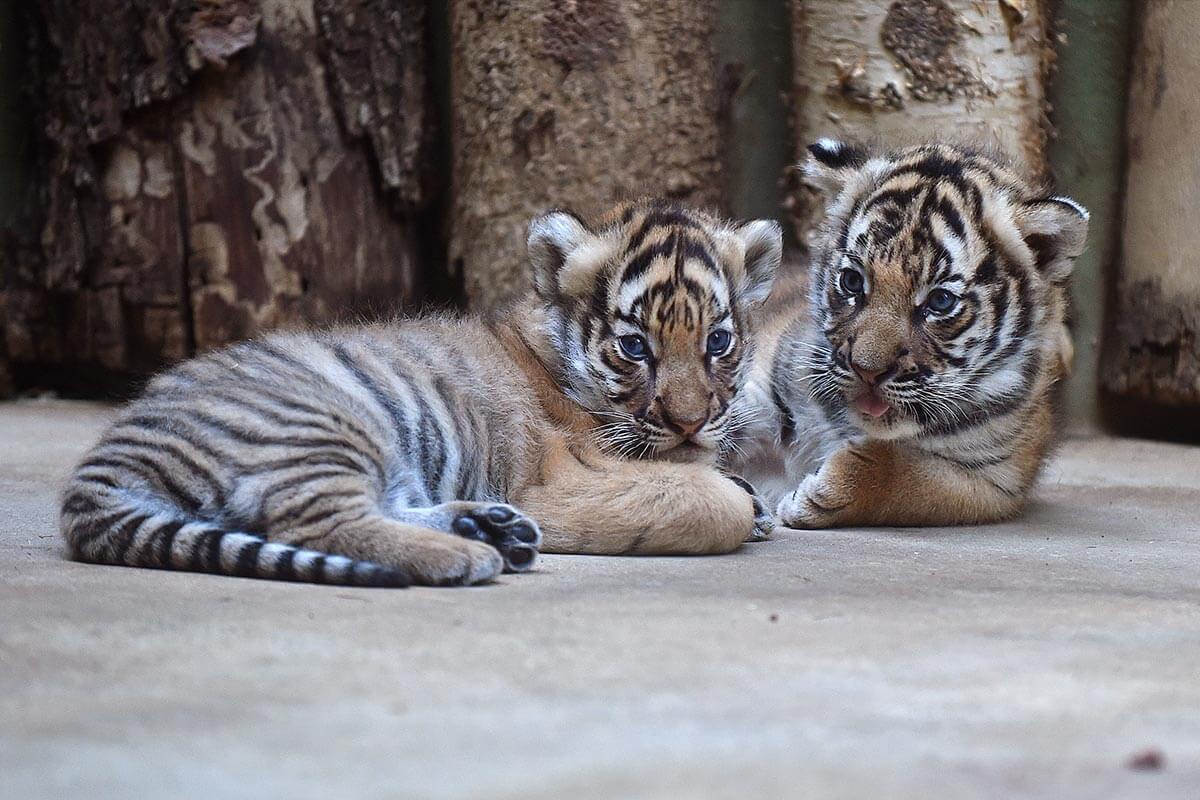
KS: The cub-petting industry fuels a troublesome cycle of breeding and discarding big cats. Because cubs can only be “handled” for a few months, cubs are being prematurely weaned and forcibly separated from their mothers, often resulting in long-term psychological repercussions. Even at a young age, cubs’ teeth and claws pose a serious safety risk. Exhibitors may even drug the animals to keep them docile – sometimes on a daily basis and rarely under the supervision of a veterinarian, which can lead to long-term health problems. The cubs are discarded around 12 weeks old to be sold into the “pet” trade, to roadside zoos, killed, or even illegally “harvested” for their body parts. Cub-petting operations need new babies all the time. This drives rampant breeding in roadside zoos and at tiger mills.
CM: What laws currently protect the big cats?
KS: There are few federal laws protecting the millions of wild animals living in captivity in the United States, some of whom are kept in private homes. While some states have restricted or banned the private possession of certain wild animals, other states have virtually no regulations. Right now, the only federal legislation that governs big cats in captivity are the Endangered Species Act—for those big cats on the endangered species list, and the Animal Welfare Act, which requires only minimum care standards for animals held at roadside zoos, including big cats. These laws fail to adequately protect both big cats and public safety. The Animal Legal Defense Fund has documented countless serious violations of the Animal Welfare Act over the years.
CM: What is being done now to remedy this?
KS: The Animal Legal Defense Fund continues to fight to free big cats and other animals from roadside zoos, so that they can be moved to accredited sanctuaries. Legislation has already been proposed. The Big Cat Public Safety Act (BCPSA) is a federal bill that would ban both the private possession of big cats and the direct public contact with their cubs. By taking cub-petting out of the equation, the BCPSA would eliminate the dangerous cycle of breeding and discarding tigers and other big cats. The goal is twofold: one, to prohibit people from keeping big cats in their homes as pets. And two, to curb the proliferation of big cats around the country. Only those who hold a USDA license would be allowed to own a big cat. Big cats belong in the wild or, in situations where captive animals can no longer safely be returned to the wild, in accredited sanctuaries equipped to meet their complex physical and psychological needs.
CM: Does this pending legislation impact the housing of big cats in all zoos?
KS: The BCPSA includes appropriate exemptions for sanctuaries, universities, and professionally run zoos as indicated by the endorsement from the Association of Zoos and Aquariums. Current private owners are grandfathered-in and are simply required to register their animals with the government to ensure that first responders and animal control officers are aware of the presence of these animals in their communities.
CM: How can citizens help?
KS: People can learn more about the laws and proposed legislation related to big cats in a webinar by the Animal Legal Defense Fund at aldf.org/TigerKing. But for this bill to become law, federal legislators need to hear from their constituents. Contact your legislators and urge them to support the Big Cat Public Safety Act, both for the safety of our communities and the well-being of big cats. People can take action at aldf.org/HelpBigCats.

*Kathleen Schatzmann is Senior Legislative Affairs Managers at Animal League Defense Fund (aldf.org). She can be reached at kschatzmann@aldf.org.
Recommended for you

Kids with Cancer Need Help… Here’s What You Can Do
The daily burdens thrust upon families who are battling pediatric cancer are [...]

Monmouth County Historical Association Virtually Celebrates Annual Garden Party
FEATURED PHOTO: MCHA Executive Committee: (l to r front row) Kathy Jones (2nd [...]
Meet Your Neighbor: Stacy Wiener
FEATURED PHOTO: This is where caption text will go for featured photo. As [...]

Monmouth Film Festival Redefines the Festival Experience this August
As film and theater folk like to say, the show MUST go on, [...]

Meet Your Neighbor: Laura Ciccone, Educational Advisor
FEATURED PHOTO CREDIT: Cathy Padilla Laura Ciccone lives in Lincroft with her [...]
Pet Celebs: August 2020
Your pets can be celebrities too. Send in a photo to info@communitymagazinenj.com! [...]